Common types of scams
On this page
Common scams
Phishing scams
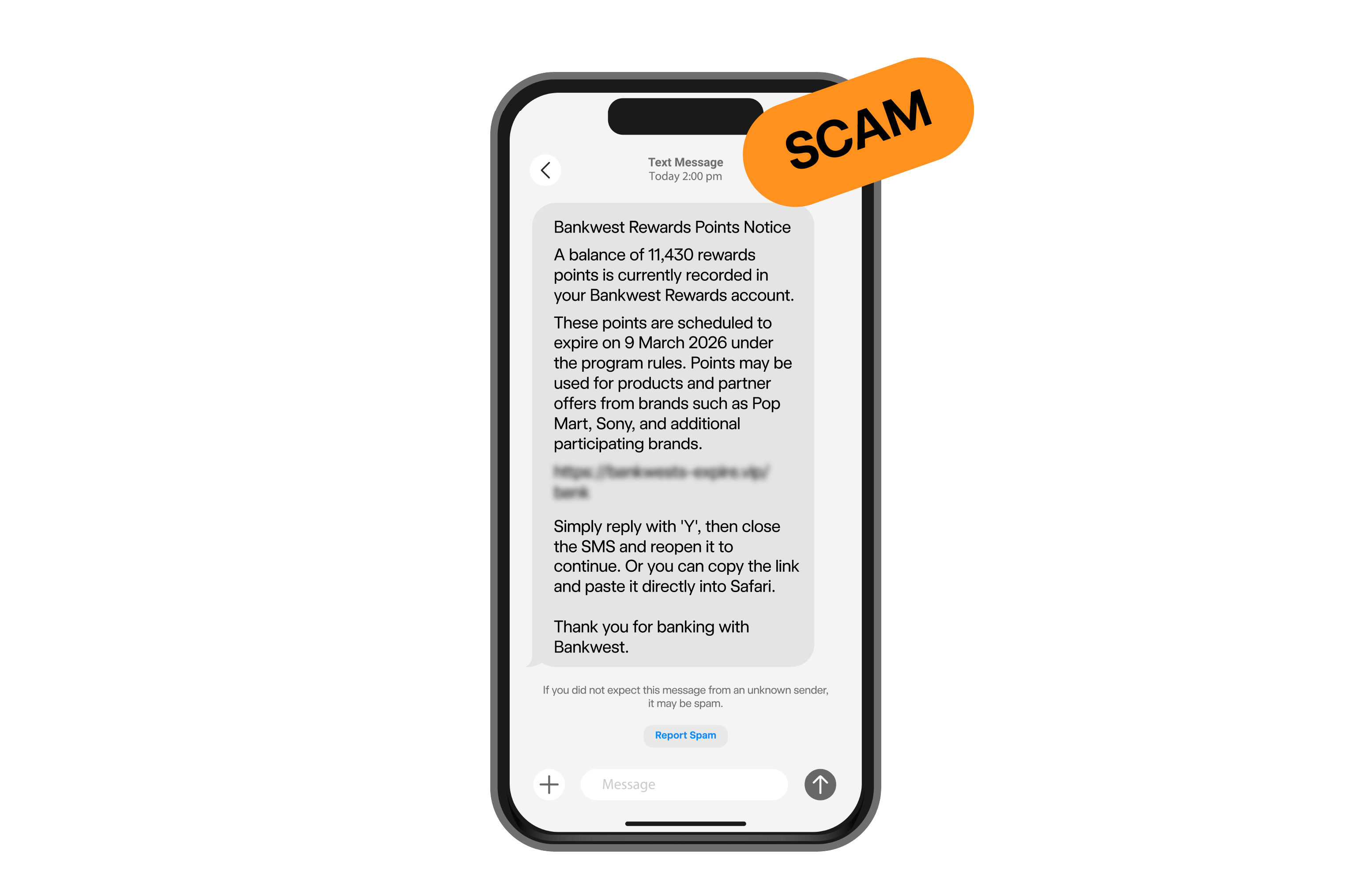
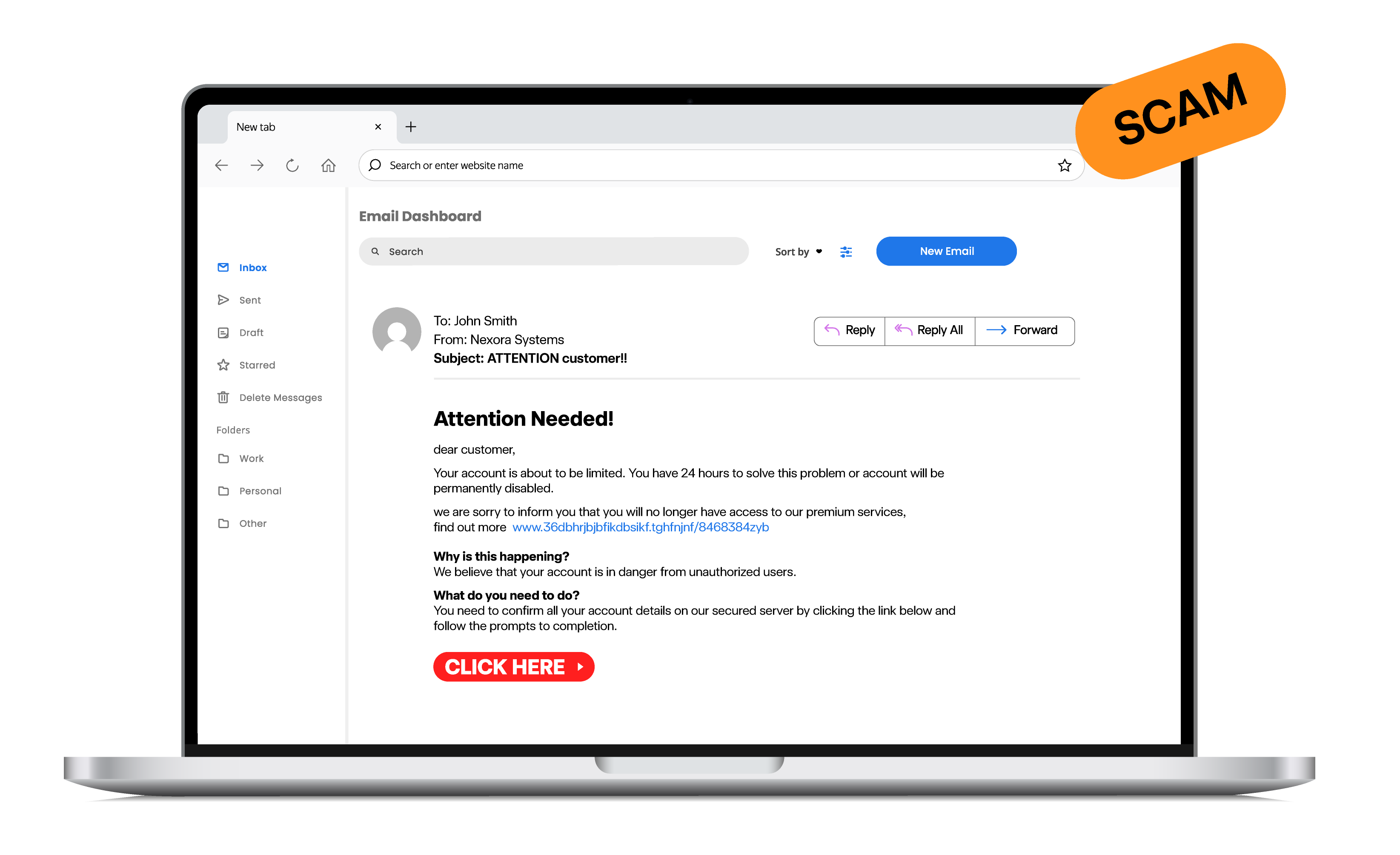
Phishing scams can arrive by phone call, email, SMS, or fake website links. Scammers pretend to be someone you trust – like a bank or government agency – and try to trick you into sharing personal details like usernames, passwords, or credit card numbers.
Investment scams
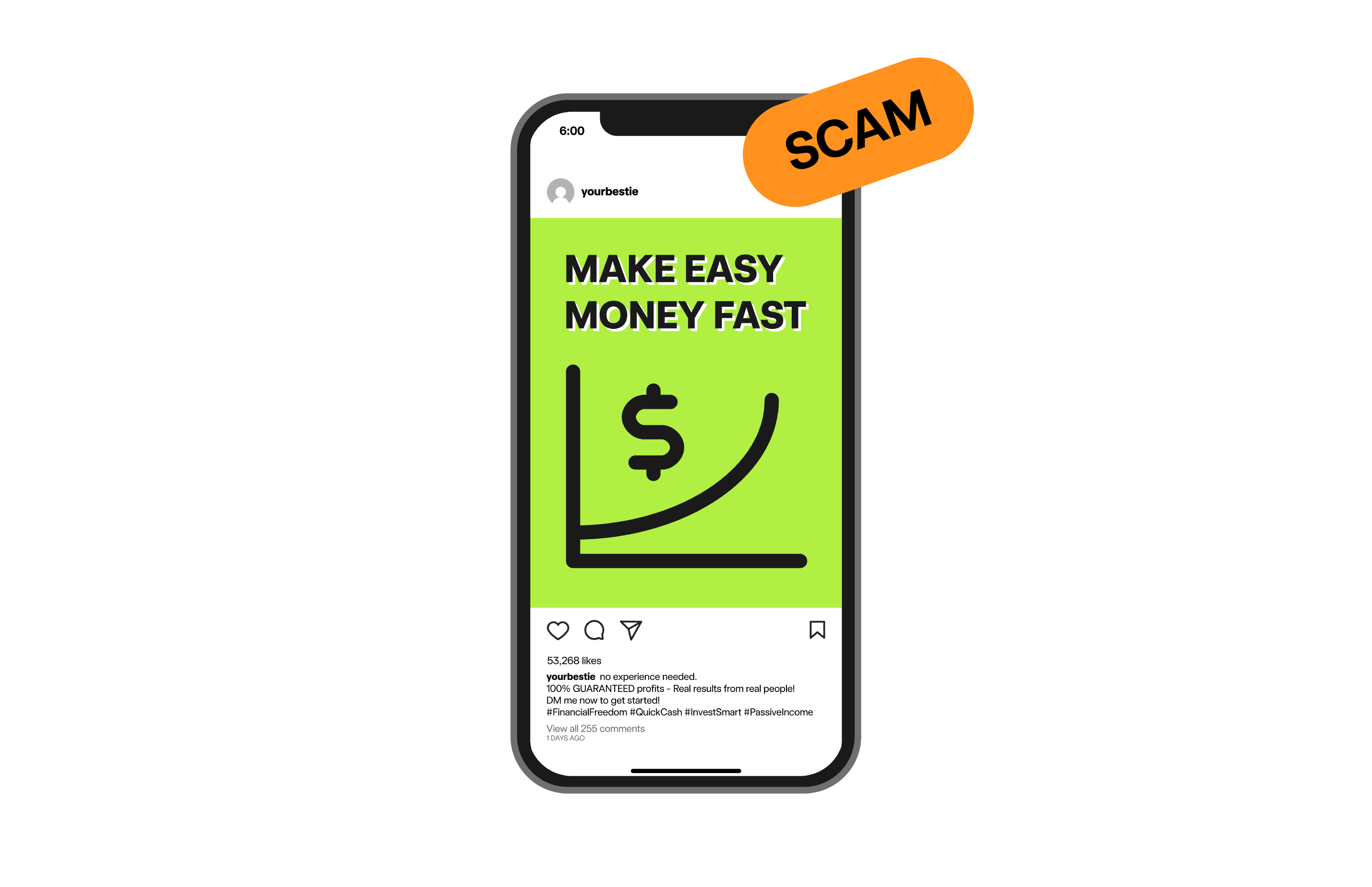
Scammers may pose as financial experts and offer fake investment opportunities that promise high returns. Their aim is to get you to transfer money into schemes that don’t exist.
Remote access scams
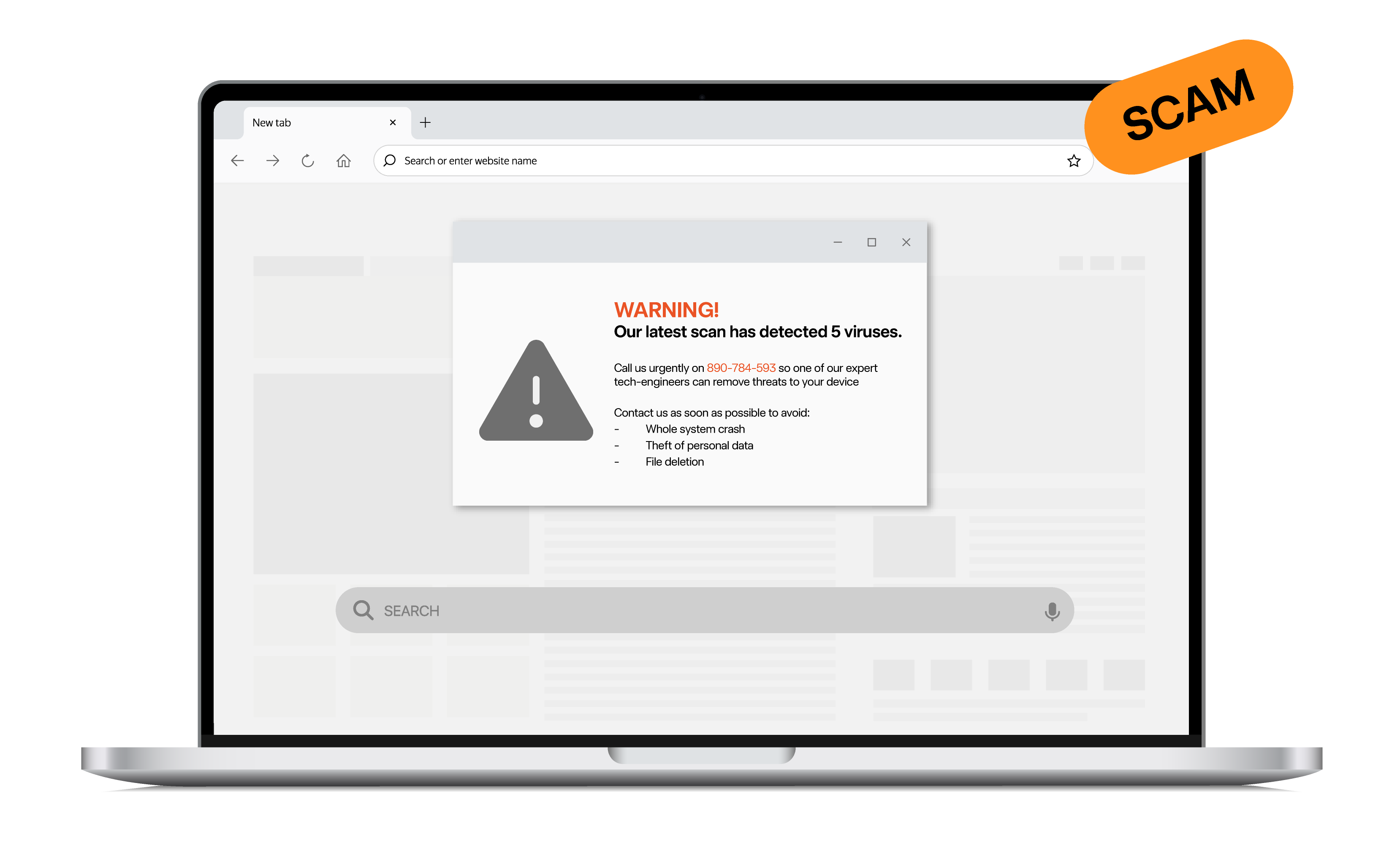
Scammers may trick you into downloading software that lets them control your device. They often pretend to be from a trusted company and may ask you to buy gift cards, fix a fake issue, or transfer money.
Romance scams
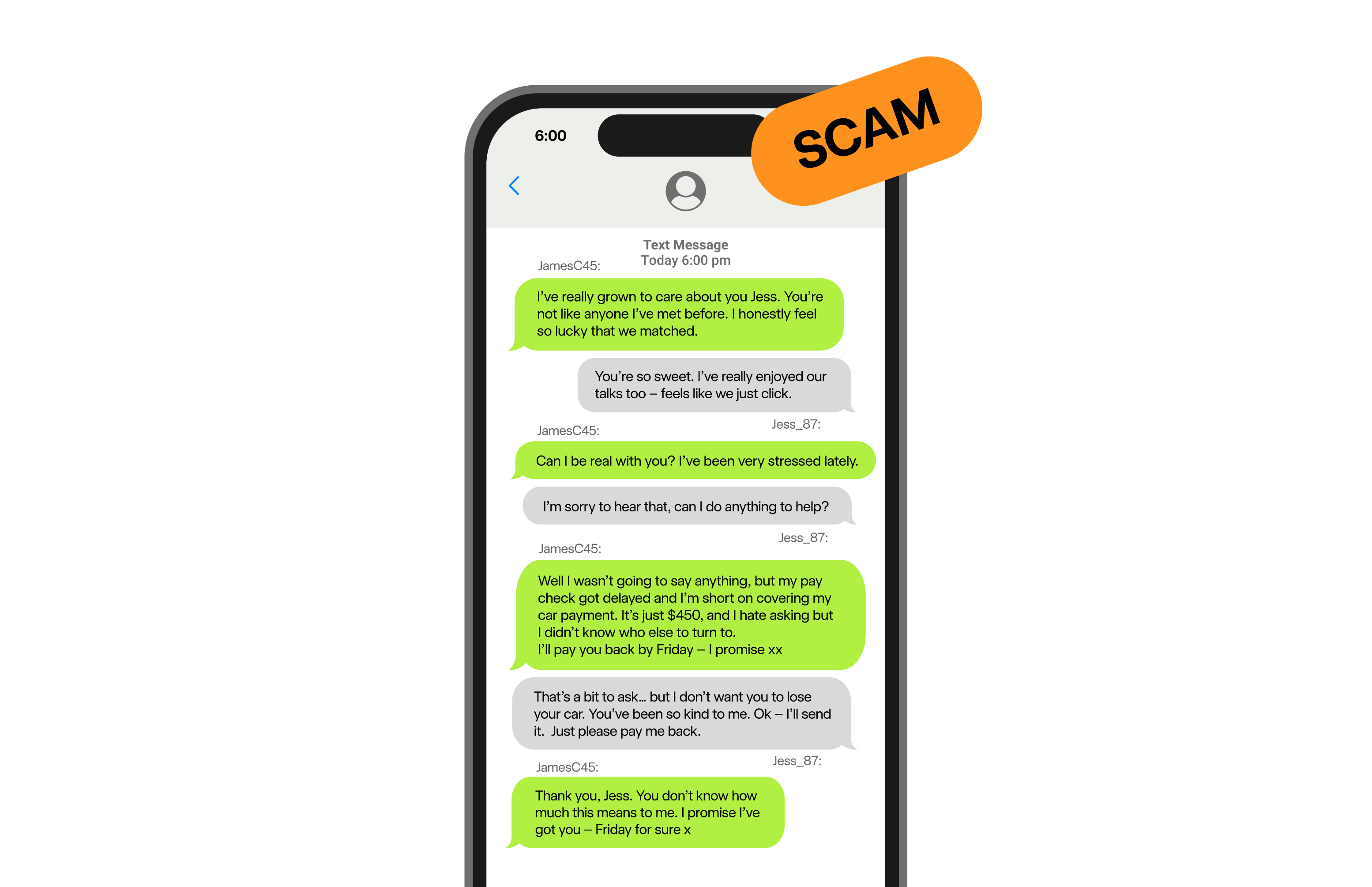
Scammers build fake relationships to gain your trust, then ask for money, gifts, or personal details. They may create fake emergencies to pressure you into sending funds or transferring assets.
Buying and selling scams
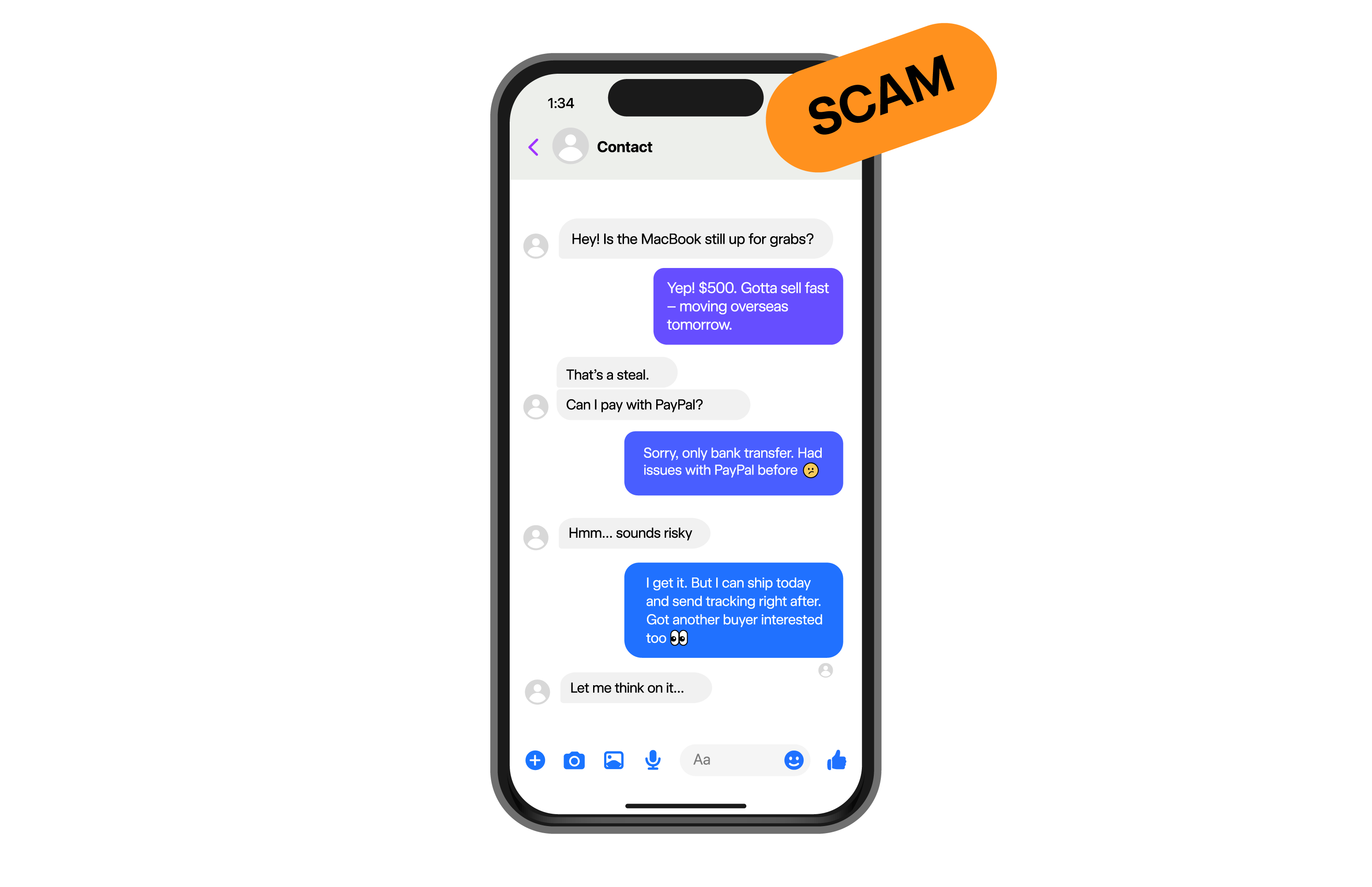
Scammers may use fake profiles or hacked accounts to sell goods or services that don’t exist. They might pose as businesses, then disappear after receiving payment.
Business email compromise scams
Scammers may hack or mimic business emails to trick you into paying fake invoices. They can change payment details without your knowledge, so the money goes to them instead of the real business.
Job scams
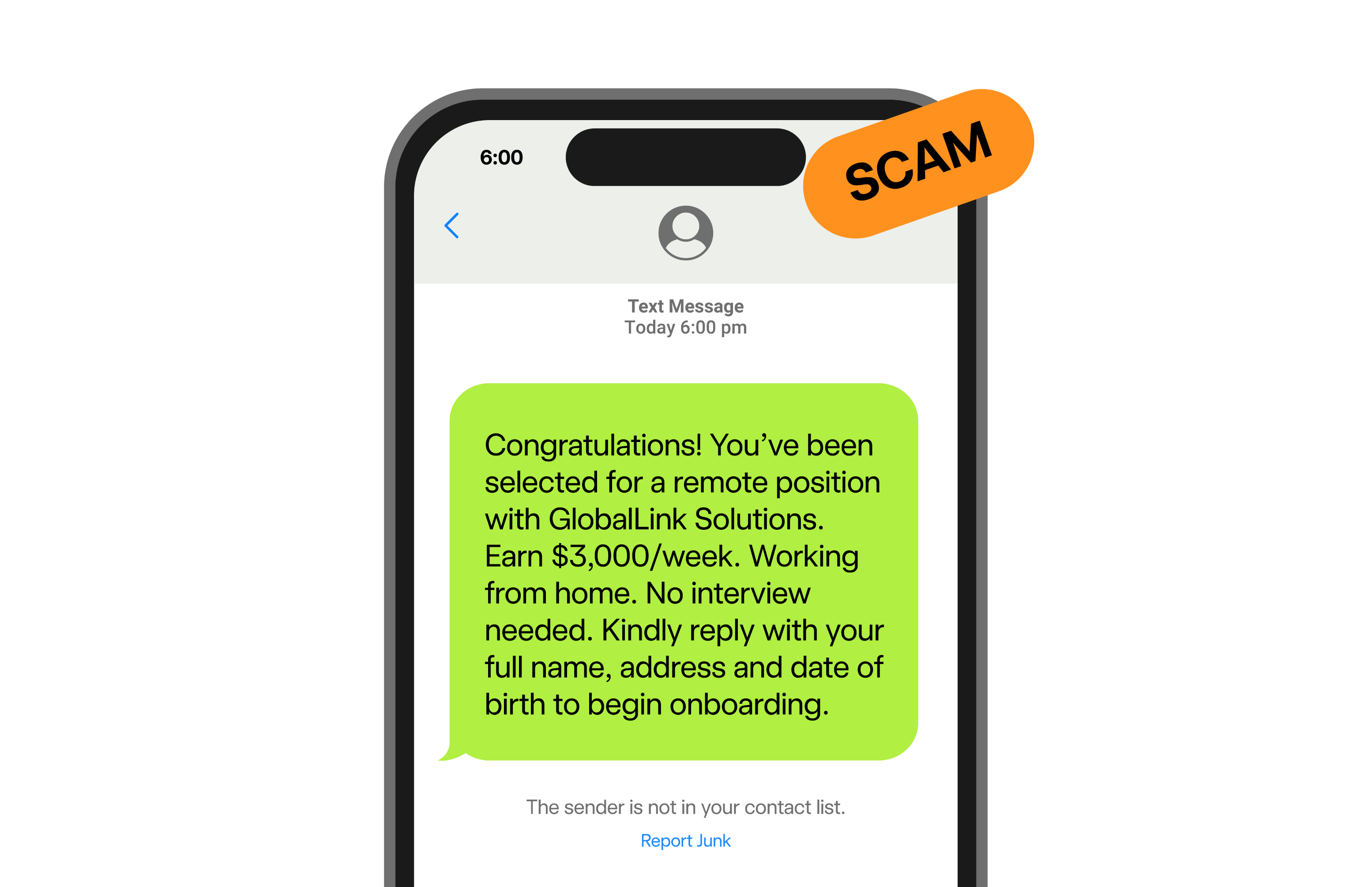
Job scams can involve fake roles that ask you to move money, making you the money mule without knowing it. Be wary of any offers involving your bank account.
Money mule scams
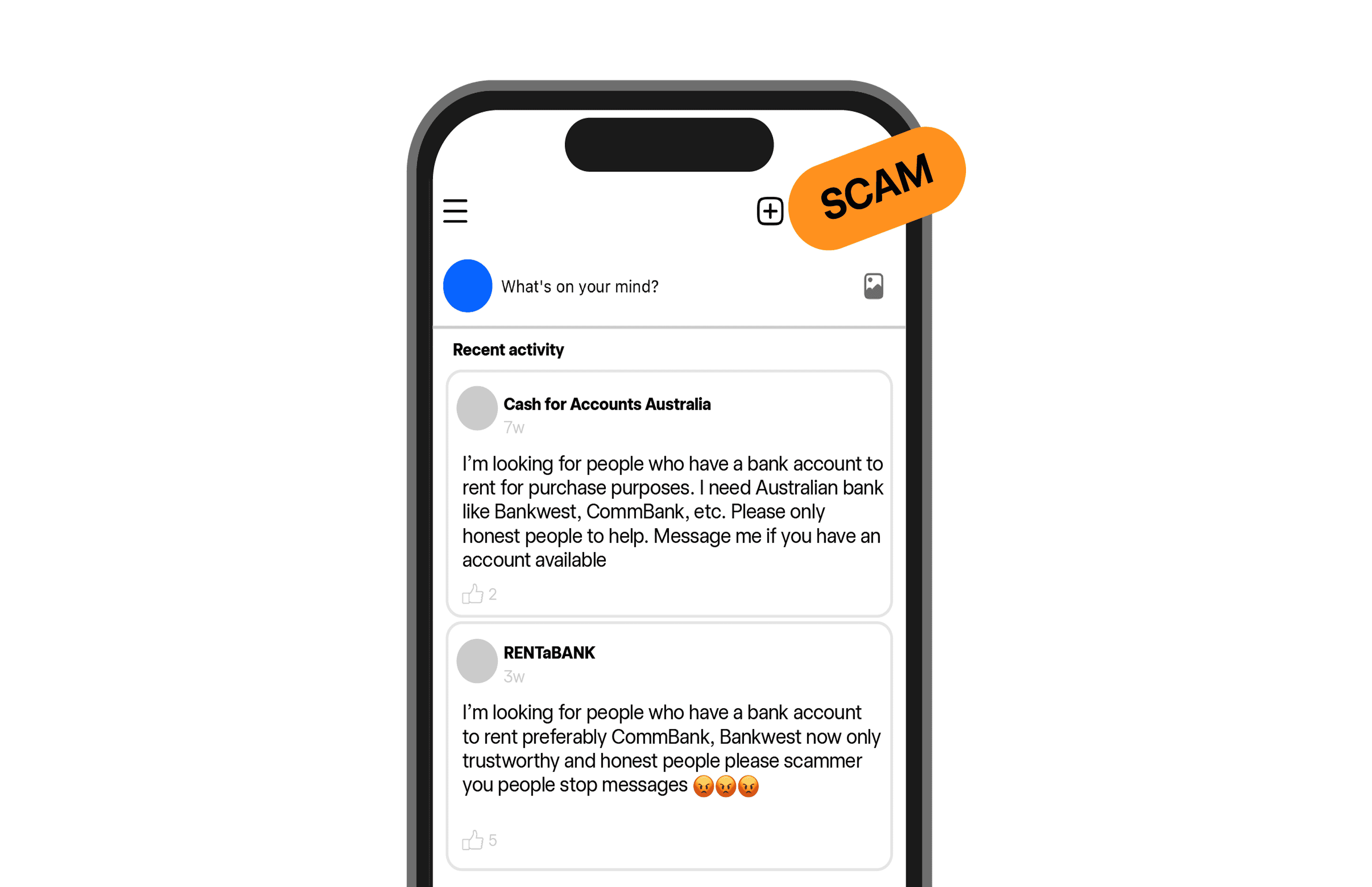
Scammers may try to use you to move stolen money. This is called money muling. They might offer “quick cash”, a job, or ask for a favour in exchange for using your bank account, like asking you to receive, transfer or withdraw money, or open an account in your name.
Even if the request seems genuine, moving money for someone else can be illegal. You could lose your money, have your account closed, or be held legally responsible.
If you receive money you weren’t expecting and are asked to move it, don’t act on it. This may be a strong warning sign of a money mule scam.
Threat and penalty scams
Scammers may use threats like visa cancellations, hacked devices, unpaid debts or legal action to pressure you into making a payment quickly.
Unexpected money scams
If someone contacts you saying you’ve won a lottery, inheritance or competition, it could be a scam. They’ll usually ask you to pay a fee or give personal details to receive the money.
Crypto scams
Scammers often promote crypto trading apps and websites that promise high returns with little risk. To help you stay informed and protect yourself we’ve implemented some measures and restrictions on cryptocurrency.
Monthly payment limit
- $10,000 monthly limit on all crypto-related payments across your Bankwest accounts – including joint and signatory accounts
- Payments over this limit will be declined, even if split into smaller amounts.
Credit card restrictions
Bankwest credit cards can’t be used to buy cryptocurrency.
Payment holds and cancellations
We’ll continue to decline or hold certain payments to cryptocurrency exchanges for 24 hours.
Receiving funds from exchanges
Withdrawals from cryptocurrency exchanges to your Bankwest account are allowed but may be subject to restrictions set by the exchange.
Contact us
Chat to us
Message us in the Bankwest App – our support team is here to help.
Call us on 13 17 19
Call us if you’re concerned about possible fraud.
Call us on +61 8 9449 2840
Call us if you need help from overseas.
Email us
If you’ve received an unusual email or SMS, send us a screenshot or forward it to [email protected].